Concrete and Patio Construction in Arvada, CO
Concrete patios, driveways and flatwork, plus the honest paver-vs-concrete conversation, poured on a base prepped for expansive clay and set with control joints where the slab wants to crack. Joseph Delgado preps the base, forms the pour, and runs the crew.
Get a real estimate in 60 seconds.
We'll follow up within one business day. No pressure, no upsells.
You Want Flat Concrete That Stays Flat, Not a Slab That Heaves
If you are looking at concrete and patio construction in Arvada, CO, the part that decides whether your slab is still flat and crack-free in ten years is the part you never see once the pour cures: the base under it. Concrete does not fail because the concrete is bad. It fails because it was poured on a base that moves. Much of west Arvada sits on expansive bentonite clay that swells when it takes on water and shrinks when it dries, and a slab poured on unprepped clay gets lifted and dropped with every wet-dry season until it cracks along the line the ground moved. D&J's compacts and preps the base, sets the reinforcement, forms the pour, and tools the control joints where the slab wants to crack anyway. Owner Joseph Delgado preps the base and runs the crew, so the person who set the grade is the person who finishes the surface.
Joseph has worked in Colorado construction for over 15 years and runs every project personally from our shop at 7470 Terry Ct in Arvada. Concrete is one of the few trades where the mistakes are permanent: once a slab is poured on a bad base with no control joints, there is no fixing it without tearing it out. Call (303) 570-2753 and you reach the owner, not a dispatcher. Estimates are free, and licensed, insured proof is available before any work starts.
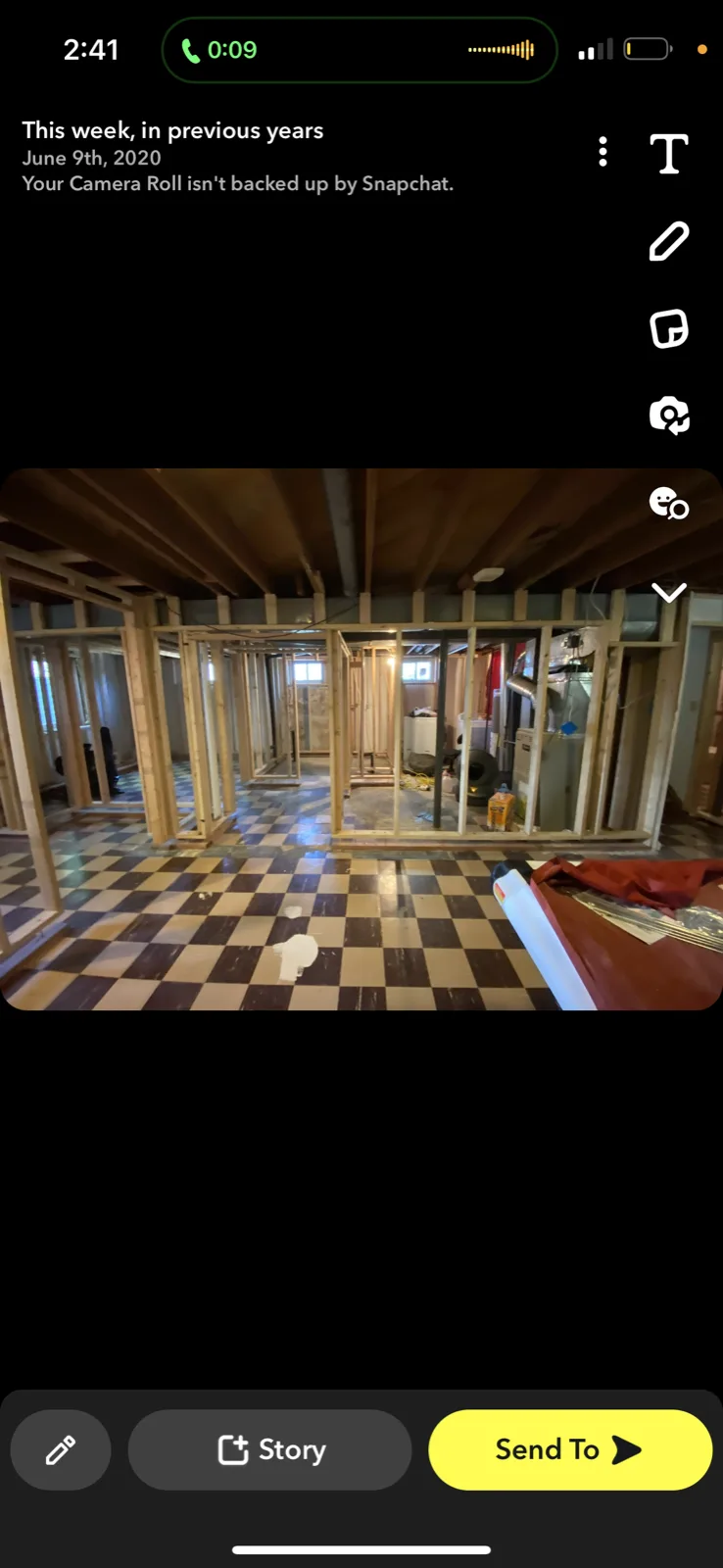
Compacted and formed base prepared for a concrete pour on a Denver metro lot
Concrete Contractor in Arvada, CO: The Base and the Joints Decide Everything
Concrete looks like the finished surface you walk on. What keeps it flat and crack-free is what you cannot see: the compacted base under it and the control joints tooled into it. Both get decided before the truck ever backs up, and both are where a cheap concrete job fails. In Arvada that failure has a specific cause. Much of the west side sits on expansive bentonite clay that swells with moisture and shrinks as it dries, and that seasonal movement pushes straight up into any slab bonded to grade. Pour a patio or a driveway on unprepped clay and it heaves in the spring, drops in the dry months, and cracks where the ground told it to.
We start every pour at the ground, not the finish. Joseph reads the soil, sets the grade, and compacts a base that gives the slab something stable to sit on.
The other silent killer is the joints. Concrete is going to crack; the only question is whether it cracks where you planned it or where it wants to. Control joints tooled or sawn at the right spacing give the slab a weak line to crack along cleanly, out of sight and out of the way, instead of wandering across the middle of your patio. We lay those joints out with the pour, not as an afterthought.
Most of the Arvada concrete we pour falls into a few buckets: a concrete patio out the back, a driveway or flatwork out front, sidewalks and walkways, and the case where a paver patio is the smarter answer than a slab. Which fits comes down to your yard, your drainage and how you want to use the space. That is a conversation, not a calculator. Ready to talk it through? Call (303) 570-2753 and reach the owner directly.
Concrete Patio Installation Across the Denver Metro
You call, the owner answers
No dispatcher, no answering service, no callback queue. Just a straight conversation with the person who runs your job.
(303) 570-2753- 01
Concrete patios
A poured concrete patio out the back, broom-finished, troweled smooth, or stamped for texture. Concrete patio installation across the Denver metro lives or dies on the base prep and the drainage away from the house, because a patio that traps water against the foundation or heaves on unprepped clay is a problem you pour in permanently. We compact the base, pitch it to drain, and joint it where it wants to crack. - 02
Concrete driveways & flatwork
New driveways, driveway replacement, garage aprons and general flatwork. A driveway carries real load and takes the worst of the freeze-thaw, so the base has to be compacted right and the slab reinforced and jointed. On a driveway replacement we tear out the old slab, find out why the first one cracked, fix the base, and pour it so the second one does not repeat the failure. - 03
Sidewalks & walkways
Front walks, side paths and the connecting flatwork between a driveway and a door. Small pours still need the same base prep and jointing as a big one, because a heaved or cracked walkway is a trip hazard, not just an eyesore. We set the grade so water sheds off it and the walk stays level through the seasons. - 04
Paver patios
When a paver patio is the better answer than a poured slab, we build that too. Pavers flex with our expansive clay instead of cracking on it, and a single settled paver lifts and resets rather than needing the whole surface torn out. The tradeoff is a compacted, screeded base and edge restraint done right up front. We lay out the honest comparison before you commit either way.
The Way We Work, in Their Words
Professional contractor with outstanding workmanship. The team completed the project smoothly, stayed within budget, and kept me updated throughout the process. Great service!
Working with the D&J's Construction Services was a wonderful experience. They are not only professional at what they do but also a great reliable construction service.
Finished concrete patio and walkway set behind a Denver metro house
Paver Patio vs Concrete: The Honest Comparison for Front Range Clay
The paver-versus-concrete question is the one we get most on a patio, and the honest answer is that it turns on how our soil behaves, not on which one photographs better. A poured concrete slab is one continuous surface: lower cost up front, faster to install, and clean-looking, but it is rigid, so when the expansive clay under it moves it cracks, and a crack in poured concrete is permanent short of a tear-out. Pavers are individual units set on a compacted, screeded base with sand between them, so they flex with the ground instead of fighting it, and when one settles you lift and reset that single paver rather than replacing the whole surface.
Neither is wrong. Which one is right depends on your yard, your drainage, and how much the ground under your specific patio actually moves.
"On the worst expansive-clay lots in west Arvada, we will steer a client toward pavers on purpose, because a poured slab there is going to crack no matter how clean the pour is. On stable ground with good drainage, concrete is the better value. The soil decides, not the brochure."
There is a maintenance tradeoff on the other side. Poured concrete is close to hands-off once it cures; a paver patio needs its joint sand topped up and the occasional reset over the years. So the real choice is upfront cost and rigidity against long-term flexibility and repairability, weighed against what your soil is doing. We walk your yard, read the drainage and the ground movement, and lay out that tradeoff straight rather than pushing whichever we would rather pour.
We work within roughly a 25-mile radius of our Arvada shop on purpose, close enough to know the soil and drainage patterns across Arvada, Wheat Ridge, Westminster, Golden, Thornton and unincorporated Jefferson County. Want a straight read on pavers versus concrete for your yard? Call (303) 570-2753 and reach the owner directly.
Concrete and Patio Projects Across the Arvada Area
From bare ground to a slab that stays flat.
Six stages, one owner accountable for the base and the joints.
1. Site walkthrough
Joseph walks the yard, reads the soil and the drainage, checks how water moves around the house, and lays out the pour. On concrete this is where heaving and cracking get headed off, and it is free.
2. Excavate & grade
We strip the area, set the grade so the finished surface sheds water away from the house and the foundation, and dig to the depth the slab and the frost conditions call for. Standing water against a slab is what starts the clay moving.
3. Base prep & compaction
We lay and compact the base that gives the slab something stable to sit on over expansive clay. This is the step cheap pours skip, and the one that decides whether your concrete stays flat or heaves with the seasons.
4. Form & reinforce
We set the forms to the grade and the lines, place reinforcement where the load and the span call for it, and plan the control joints before the truck arrives, so the slab has a weak line to crack along cleanly.
5. Pour & finish
The crew pours, screeds, and finishes the surface, broom, trowel or stamp, with Joseph on site, then tools or saws the control joints at the right spacing. Quality checks happen at each stage rather than as a scramble at the end.
6. Cure & handover
We finish and protect the pour so it cures properly instead of drying too fast and crazing, clean up the site, and hand you flatwork built on a base and jointing meant to hold up to Front Range seasons.
Pour Your Arvada Concrete or Patio with the Owner Running It
Tell us about the space and how you want to use it, patio, driveway, walkway or pavers. Joseph walks the yard, reads the soil and the drainage, and sends a written estimate. Call (303) 570-2753 or send your info and we will follow up within one business day.
Call directly (303) 570-2753- Free estimates
- Owner-operated
- Licensed & insured
Flatwork Built on a Base That Holds
Concrete patios, driveways and flatwork, sidewalks and walkways, or a paver patio when the soil calls for it. Joseph compacts the base, forms the pour, tools the control joints, and runs the crew himself. Call <a href="tel:+13035702753" class="text-accent font-semibold hover:underline">(303) 570-2753</a> for a free estimate.